
When people think about healthcare fulfillment programs for aging populations, they often focus on large or high-cost categories like durable medical equipment, diabetes supplies, or prescription medications. But after years of administering Medicare Advantage OTC benefit programs, we learned that some of the most consistently important products were also some of the simplest.
Two things surprised us year after year: how much toothpaste we shipped and how many foot care kits members ordered.
At one point, we were distributing nearly $100,000 worth of toothpaste annually. But even more surprising was the steady demand for foot care kits. For years, we shipped 20 to 30 foot care kits every single day to a relatively small population of health plan members.
Before working in healthcare fulfillment, many of us had no idea how important simple foot care products become as people age. But after years of supporting Medicare populations, the demand started to make perfect sense.
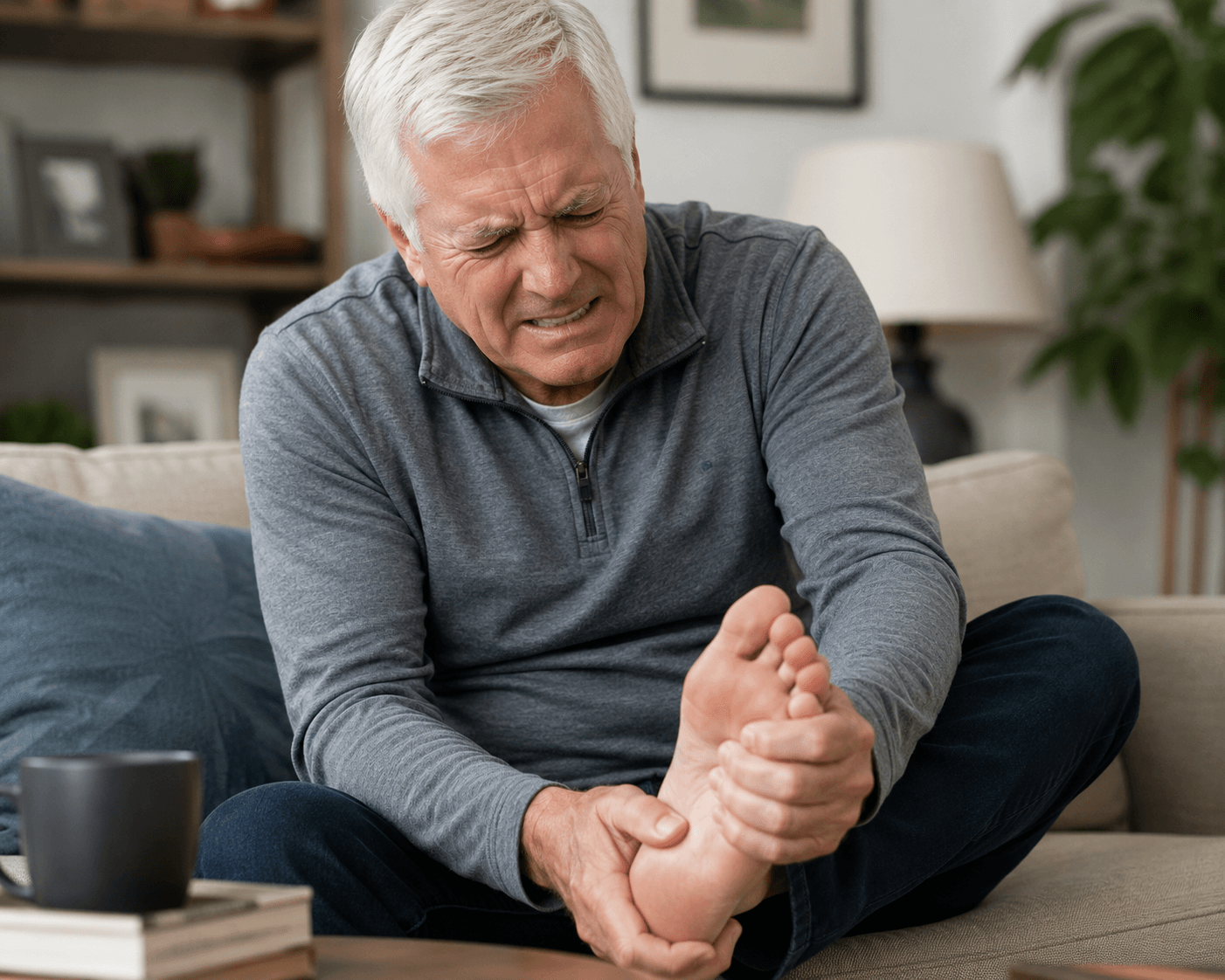
Small everyday foot issues like corns, calluses, dry skin, irritation, athlete’s foot, and general foot discomfort can have a major impact on comfort and mobility. Something as routine as grocery shopping, walking through the house, or standing long enough to prepare a meal becomes more difficult when your feet hurt.
That is why distributing foot care supplies for aging patients is not just about shipping products. It is about supporting mobility, independence, comfort, and quality of life.
Why Foot Care Matters More as Patients Age
The average person places an enormous amount of stress on their feet over a lifetime. Years of walking, standing, exercise, work, and normal wear eventually take a toll. As people age, the body’s ability to recover from that stress changes, and small foot problems that once felt minor can become persistent sources of discomfort.
For many older adults, even manageable foot irritation can discourage physical activity. Patients may begin walking less, avoiding exercise, or limiting daily movement because of pain or discomfort. Over time, reduced mobility can affect overall wellness and independence.
Foot care becomes even more important for individuals managing chronic conditions like diabetes or circulation-related concerns. Small issues may require closer monitoring and professional care, especially when healing becomes more difficult.
Healthcare organizations are increasingly recognizing that proactive support matters. Helping patients access simple over-the-counter foot care products at home can improve convenience while helping patients address minor issues before they escalate.
Of course, fulfillment programs are not a replacement for medical care. Patients experiencing wounds, infections, numbness, severe pain, or diabetic foot complications should always consult a qualified healthcare provider or podiatrist. But making approved foot care products easier to access can still play an important role in patient support programs.
The Real Demand for Foot Care Products
One of the biggest lessons we learned from administering OTC benefit programs was how frequently members reordered foot care items once they discovered products that worked for them.
Many healthcare executives assume foot care is a small category because it does not generate the same attention as larger healthcare initiatives. Operationally, though, demand tells a different story.
For many aging patients, foot discomfort is not occasional. It is daily.
When members found relief from products designed to help with calluses, corns, dry skin, fungal irritation, or foot soreness, those products often became essential household items. In many cases, members looked forward to reordering them every benefit cycle.
That demand also revealed something important about healthcare fulfillment programs in general: sometimes the products with the greatest day-to-day impact are the least glamorous.
A simple foot care kit may not sound exciting in a boardroom presentation, but to a patient struggling with discomfort every morning, it can genuinely improve daily life.
What Healthcare Organizations Should Consider When Distributing Foot Care Supplies
Distributing foot care supplies for aging patients involves much more than maintaining inventory. Healthcare organizations need a fulfillment process that is reliable, scalable, and easy for members to navigate.
The patient experience matters at every stage:
- Is the ordering process simple?
- Are products clearly labeled?
- Can kits be customized by member population or program goals?
- Are instructions easy for older adults to understand?
- Can shipments be tracked and replenished efficiently?
- Does the packaging support a positive member experience?
These operational details are often overlooked until programs scale.
For example, a health plan may initially offer individual foot care products through a standard OTC catalog. But as utilization increases, organizations often discover that bundled kits improve ordering simplicity and patient satisfaction.
Instead of asking members to search through dozens of individual SKUs, a curated foot care kit can provide commonly needed items in one package.
And honestly, finding relief from foot pain should not feel like an Indiana Jones treasure hunt through a 120-page catalog.
What a Foot Care Kit Can Include
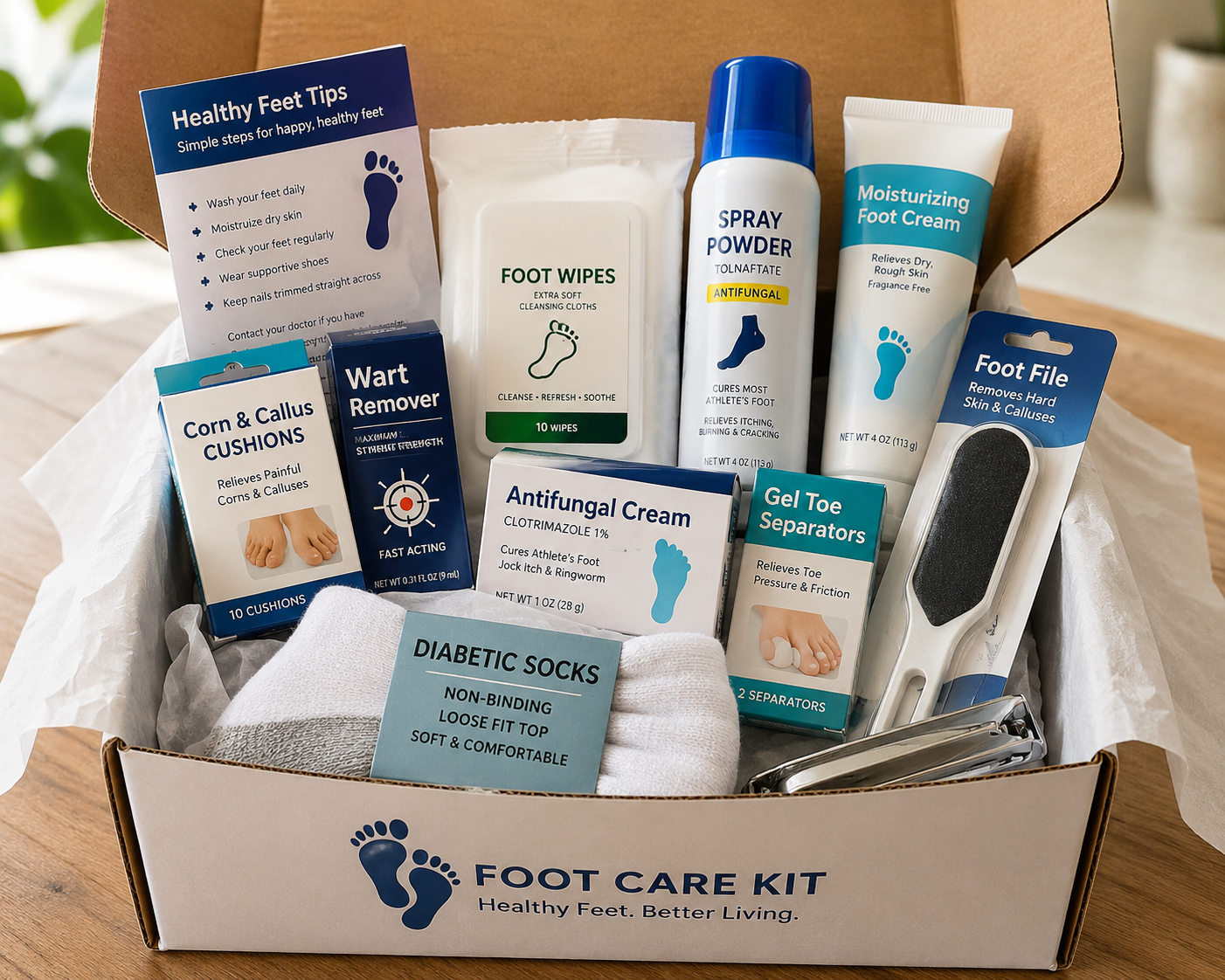
Depending on program requirements and approved product lists, foot care kits may include products designed to support common non-emergency foot concerns.
Some organizations include:
- Corn and callus cushions
- Antifungal creams or sprays
- Foot powders
- Moisturizing creams
- Cushioned inserts
- Diabetic-friendly socks
- Basic nail care items
- Educational materials with simple foot care guidance
In our experience, the educational insert is often just as valuable as the products themselves.
Providing patients with basic instructions about proper foot hygiene, signs of irritation to monitor, and reminders about when to contact a healthcare provider can help patients feel more confident managing everyday foot concerns.
Sometimes the biggest value comes from helping patients recognize that small issues are worth paying attention to before they become larger ones.
Why Fulfillment Quality Matters in Healthcare Programs
Healthcare fulfillment is different from traditional ecommerce.
Patients are not ordering novelty items or impulse purchases. Many are older adults managing chronic conditions, mobility challenges, or transportation limitations. Delays, incorrect shipments, confusing packaging, or poor communication create frustration very quickly.
That is why healthcare organizations need fulfillment partners that understand the operational realities of healthcare distribution.
A strong fulfillment program should support:
- Accurate pick-and-pack operations
- Inventory management
- Custom kitting
- Mail-order distribution
- Program scalability
- Clear patient-friendly packaging
- Reporting and tracking
- CMS-conscious program administration
Most importantly, the process needs to feel simple for the member.
Patients should not need technical knowledge or extensive support just to access basic healthcare products.
Home Delivery Creates Better Access
For many aging patients, home delivery is one of the most valuable parts of an OTC or healthcare supply program.
Transportation challenges, mobility limitations, weather concerns, and caregiver availability can all affect a patient’s ability to shop in person. Delivering foot care products directly to the home removes one more barrier to access.
What may seem like a small convenience operationally can become a meaningful quality-of-life improvement for patients.
And after years of seeing the consistent demand for these products firsthand, we can confidently say this category matters far more than many people initially assume.
Supporting Aging Patients Through Better Healthcare Fulfillment
Distributing foot care supplies for aging patients is ultimately about more than products. It is about helping patients stay comfortable, mobile, and independent while making healthcare support easier to access.
At OTC Benefit Solutions, we help healthcare organizations build healthcare fulfillment programs that support aging populations through custom kitting, mail-order distribution, inventory management, and direct-to-home delivery solutions.
From OTC benefit programs to specialized healthcare supply fulfillment initiatives, we help organizations simplify distribution while improving the member experience.
To learn more about building a healthcare fulfillment program for aging patients, contact our team for program information, product options, and fulfillment solutions.